Bedding · Bedroom essentials
How to Choose Sheets and Bedding for an Adjustable Bed Frame
An adjustable bed changes more than your sleeping position: when the head or foot of the mattress rises, sheets and blankets must move with it. The right fit begins with accurate measurements, continues with a considered choice of fabric and construction, and ends with a bed that feels inviting in every position.
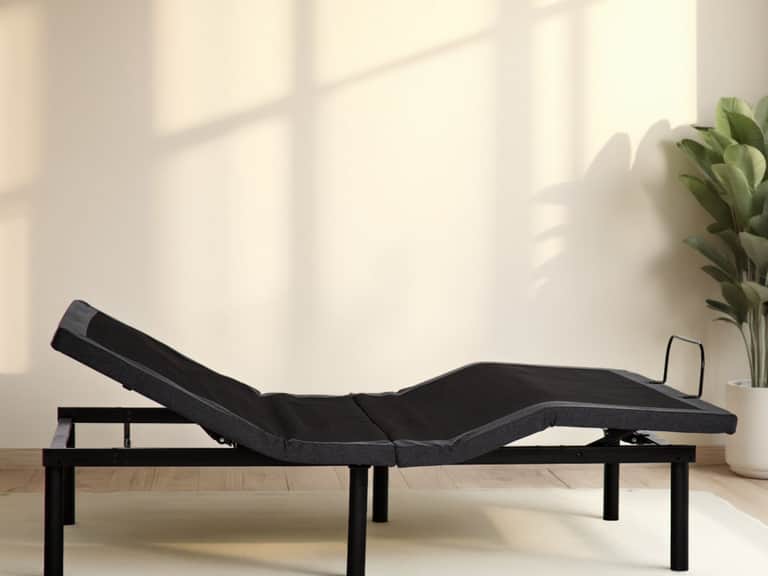
An adjustable bed can turn a familiar bedroom ritual into something more personal. Raise the head for reading, lift the legs to unwind, or return the base to flat before sleep. Yet each adjustment changes the mattress’s shape—and asks the bedding to adapt. A fitted sheet that seems generous at first may pull free at the corners. A duvet may slide toward the foot. On a split setup, two sleepers may discover that one beautifully smooth sheet cannot accommodate two mattresses moving independently.
None of this means adjustable beds require complicated or specialist bedding. It means that a few details deserve more attention than they might on a fixed frame: mattress dimensions and depth, pocket construction, elastic strength, sheet-set configuration, and the feel of the fabric against the skin. Choose with those practicalities in mind, and the bed can remain composed whether it is level or gently articulated.
Start with the mattress, not the label on the box
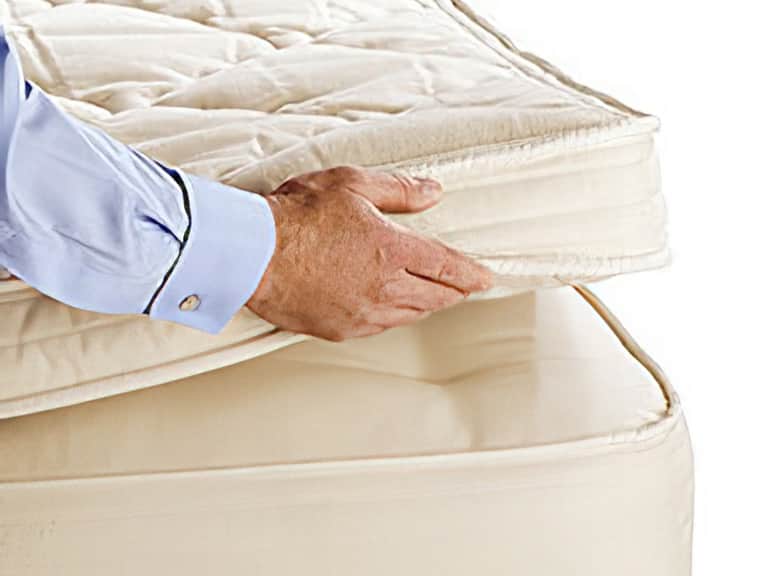
Bed-size names are useful shorthand, but they do not tell the whole story. Before buying sheets for an adjustable bed frame, measure the mattress itself. Record its width, length, and depth, including any built-in pillow top or substantial mattress pad that will stay in place beneath the fitted sheet. If the mattress has a curved edge or unusually rounded corners, note that too: a close fit depends on shape as well as inches.
Depth is especially easy to overlook. A standard fitted sheet may fit the mattress when it is flat but stretch under strain as the base rises. If its corners are already working hard, an incline can tug the fabric upward, loosen the elastic, or expose the mattress. Measure from the mattress’s bottom edge to its highest point, then add the thickness of any protector or pad that will sit beneath the sheet. Compare that total with the sheet’s stated pocket depth, allowing enough room for the fabric to tuck securely underneath.
“Deep pocket” is not a universal measurement. One manufacturer’s description may refer to a sheet designed for a fairly substantial mattress; another may use the phrase for a different depth altogether. Look for the actual fitted-sheet dimensions or stated mattress-depth range, rather than relying on the label alone. A sheet should cover the sides and wrap beneath the mattress without being stretched taut across the top.
Pocket depth and elastic: the quiet mechanics of a secure fit
The most graceful bedding is often the bedding that goes unnoticed. A fitted sheet should stay smooth through ordinary movement, without pulling at the corners or bunching under the body. Pocket depth is one part of that equation; the elastic and corner design matter just as much.
Elastic all the way around the fitted-sheet perimeter can help maintain tension more evenly than elastic placed only at the corners. Reinforced, double-stitched corners can also withstand repeated stretching and laundering. Deep pockets offer useful coverage, but a pocket that is much deeper than the mattress may leave surplus fabric to gather underneath. Aim for a secure wrap rather than simply choosing the deepest sheet available.
- Measure the complete stack. Include the mattress, protector, and any pad that stays on the bed.
- Check the pocket-depth range. Choose a sheet that covers your measured depth without needing to be forced over the corners.
- Inspect elastic placement. A well-finished perimeter and reinforced corners can help the sheet hold its position.
- Look for a consistent fit. The sheet should lie smoothly on top, with enough fabric to tuck beneath the mattress.
A protector can affect fit even when it seems thin. If you use one, measure with it in place, and check its own mattress-depth specifications. The Sleep and Beyond Organic Cotton Waterproof Mattress Protector, for example, is described with different pocket depths by size, including options for mattresses up to 14 or 18 inches. That makes checking the exact size particularly worthwhile when layering it under a fitted sheet.
Split king and split California king: two mattresses, different needs
“Split king” can describe different arrangements, so confirm the configuration before choosing bedding. A common setup uses two Twin XL mattresses side by side to create a king-size sleeping surface. With a split adjustable base, each side can move independently. A split California king also has two separate mattresses, but the overall dimensions differ. Size names can vary by manufacturer, so verify the mattress measurements and base instructions rather than assuming that a set labeled “split” will fit.
For independently moving mattresses, separate fitted sheets are usually the simplest choice. Each sheet follows its own mattress as the head or foot lifts, so one side can rise without drawing the other side out of place. A split king set commonly includes two Twin XL fitted sheets, alongside a shared flat sheet and king pillowcases. Before ordering, check the contents carefully: some sets include one fitted sheet, while others are specifically designed for two separate mattresses.
The flat sheet is a matter of preference and practicality. A single king flat sheet can create a unified, hotel-like appearance across both sides. Separate top sheets give each sleeper more freedom and may reduce the sensation of tugging when one person changes position. Some households use individual blankets or duvets, which move more easily with each side and can make temperature preferences simpler to manage.
For split California king beds, verify both the overall mattress dimensions and the fitted-sheet pieces required. A split set may be built for two California king halves, two other mattress sizes, or a specific adjustable-base arrangement. Confirm whether the top sheet is shared, whether two fitted sheets are included, and whether the pillowcases correspond to the pillows you use. These small checks prevent the frustrating discovery that a set fits the bed’s width but not its length or configuration.
Percale or sateen? Choose by feel and climate
Once fit is settled, the weave shapes the experience. Percale and sateen are both cotton weaves, but they feel distinct. Percale typically has a crisp, matte surface and an airy hand. Many people who sleep warm appreciate its fresh, less-clingy feel. It often softens with washing while retaining a clean, light character.
Sateen has a smoother surface and a subtle sheen, with a fluid drape that feels soft against the skin. It may feel warmer and more enveloping than percale, which can be welcome in a cool room or for someone who prefers a more polished, silky finish. Neither weave is automatically better: the choice is a question of tactile preference, bedroom temperature, and how much drape you enjoy.
Thread count, often treated as a shorthand for luxury, cannot by itself tell you whether a sheet will feel comfortable or last well. Fiber quality, yarn, weave, finishing, and construction all contribute. A breathable percale made from well-considered cotton can be a more suitable choice for a warm sleeper than a heavier, smoother fabric with a higher stated count. Think about the way the sheet feels and performs, not a single number on a label.
For a cool, crisp surface, the Sleep and Beyond Organic Cotton Percale Sheet Set is described as a 270-thread-count organic cotton percale, with deep fitted-sheet pockets designed to accommodate mattresses up to 18 inches. Its Split King configuration includes two Twin XL fitted sheets, a useful detail for a divided bed. As with any set, compare the listed dimensions with your own mattress and check that the set’s contents suit your particular arrangement.
If a smoother sateen feel appeals more, the Sleep and Beyond mySheet Set is described as a 300-thread-count cotton sateen set with reinforced elastic and pockets for mattresses up to 18 inches. A specification can narrow the field, but it cannot replace personal preference: some sleepers love the softness and drape of sateen, while others find percale more refreshing.
Fabric is only one layer of the decision
Sheets are the most immediate point of contact, but the rest of the bedding also responds to movement. A fitted sheet is anchored to the mattress; a flat sheet, blanket, or duvet rests more freely and can shift when the base changes angle. The more layers you use, the more important it becomes to consider their weight, length, and tendency to slide.
A duvet cover can help protect an insert and give the bed a finished look, but a particularly heavy comforter may drift toward the foot when the mattress is raised. A lighter cover or blanket may be easier to manage, especially if you adjust the base frequently. If you prefer a single generous top layer, arrange it with enough room at the foot and sides to move naturally rather than tucking it tightly around every edge.
Mattress protectors and pads add comfort and protection, but every layer increases the effective depth that the fitted sheet must accommodate. If you add a new topper, recheck the fit instead of assuming a sheet that once stayed put will continue to do so. For an adjustable bed, thickness can influence not only corner coverage but also how the bedding behaves as the mattress flexes.
Pillows, too, can be part of the setup. When the head section rises, pillows may slide or settle differently against the headboard. Pillow size, loft, and the shape of the headboard area can affect how comfortable the raised position feels. These details do not change the fitted-sheet size, but they can help the whole arrangement feel intentional rather than improvised.
A practical fitting test before the first night
When new sheets arrive, fit them before washing if the care label permits, so you can assess the dimensions while any exchange options remain available. Put the mattress in its flat position and fit each corner carefully. The sheet should reach beneath the mattress without excessive force, and the top should look smooth rather than stretched drum-tight.
Next, raise the head and foot sections through the positions you expect to use. Watch the corners and the center seam, if there is one. The sheet should remain in place without pulling sharply, and the fabric should not lift enough to expose the mattress. Return the base to flat, smooth out any wrinkles, and repeat the test once more. A brief trial can reveal problems that are hard to spot when the bed is stationary.
Use the remote and operating instructions supplied with your base, and follow the manufacturer’s guidance for mattress compatibility and movement. Some bedding problems stem from an ill-fitting sheet; others may relate to how a particular mattress flexes or how a topper is secured. If your mattress or base has specific requirements, those instructions take precedence over general advice.
Care that helps bedding keep its shape
Follow the laundry instructions on the sheet label. Washing in water that is hotter than recommended or using high dryer heat can contribute to shrinkage, which may turn an adequate fit into a tight one. Avoid overloading the washer and dryer; bedding needs room to move through the cycle and dry evenly.
It is sensible to wash new sheets before use when the care instructions allow it. Organic cotton may change slightly after laundering, so any guidance about prewashing or expected shrinkage is worth noting. Rotate between sets when possible, and store clean bedding in a dry, well-ventilated place. If the elastic begins to lose its hold or the corners no longer cover the mattress securely, replace the fitted sheet rather than relying on a strained fit.
Protectors can also make everyday care easier by providing a washable barrier beneath the sheet. Choose one that fits the mattress depth and is suitable for your laundry routine. A protector that shifts, wrinkles, or pulls can undermine the smoothness of even a carefully chosen fitted sheet, so test the whole bedding stack together.
A simple checklist for choosing adjustable bed sheets
- Measure mattress width, length, and depth, including permanent pads or protectors.
- Match the actual fitted-sheet pocket depth to the full height of the bedding stack.
- Check elastic coverage, reinforced corners, and the stated mattress-size range.
- For a split king or split California king, confirm the number and dimensions of fitted sheets.
- Decide whether one shared flat sheet or separate top layers will suit the way the bed is used.
- Choose percale for a crisp, airy feel or sateen for a smoother, more fluid finish.
- Raise and lower the base with the new bedding in place before relying on it overnight.
- Follow care instructions to help reduce shrinkage and preserve elastic performance.
The polished bed is the one that moves well
Beautiful bedding on an adjustable bed is not simply a matter of selecting a luxurious fabric or making a pristine flat-bed arrangement. It is the result of proportion and ease: a sheet deep enough to cover the mattress, elastic that stays composed, and layers that respond gracefully when the bed changes shape. When those fundamentals are right, the appearance is naturally more relaxed and the nightly routine less fussy.
Begin with measurements, then choose the configuration that fits the way the bed moves. A single mattress may need little more than an accurate deep-pocket sheet. A split setup calls for close attention to the two mattress halves and the contents of the sheet set. From there, let touch and temperature guide the choice between percale and sateen. The goal is not a complicated bedding system; it is a quiet, secure one that feels just as considered when the bed is raised as it does when it lies flat.